
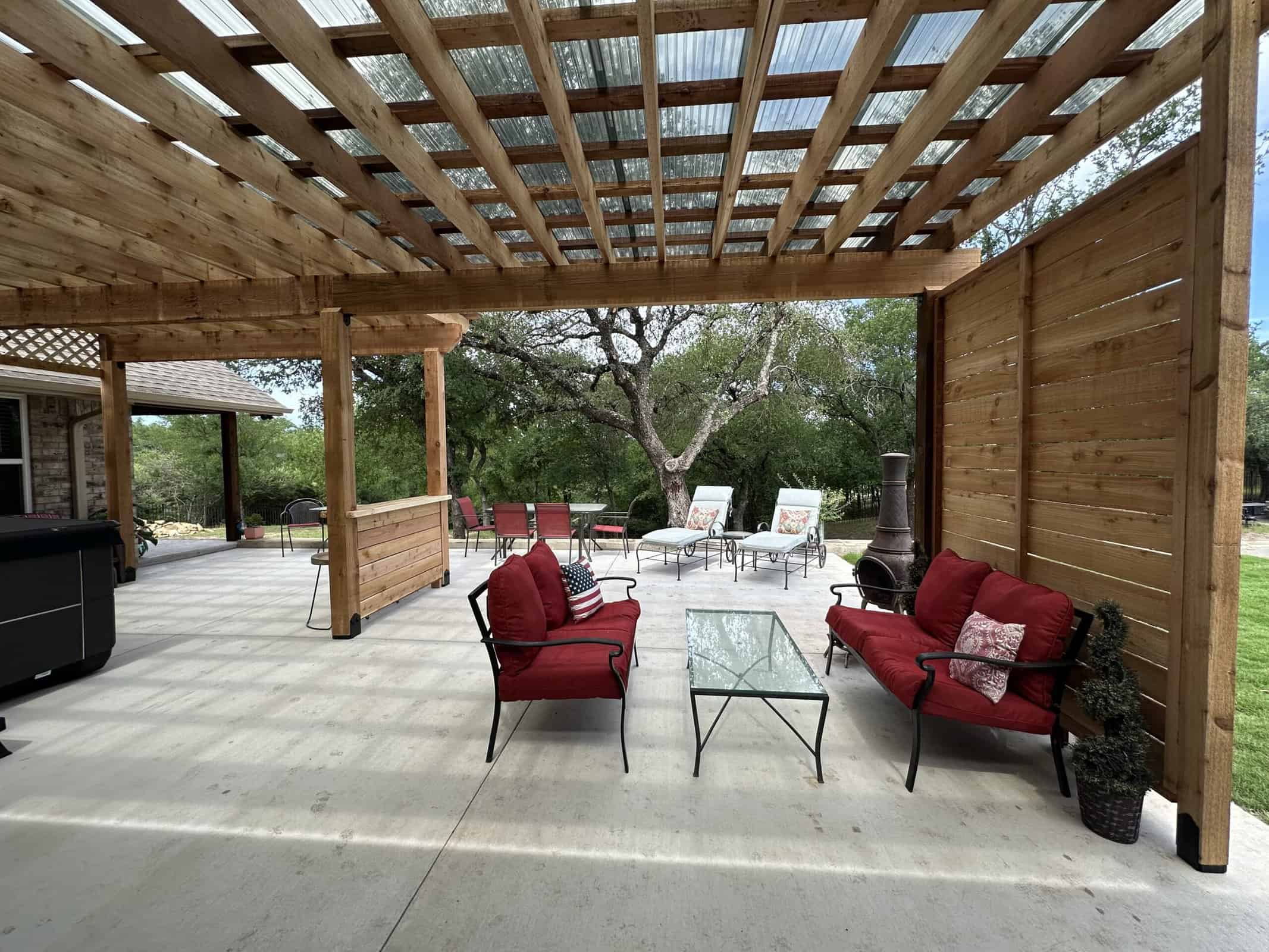
Outdoor Living Spaces in Fort Worth: Patios, Pergolas, and What They Really Cost
A good outdoor living space earns its keep in Fort Worth. For most of the year, a covered patio works like an extra room. Morning coffee out back in April, football on a fall evening, dinner outside while the kids run the yard. Done right, it becomes the most-used square footage on the property.
The question we hear most often is not whether a patio or pergola is worth building. It is what these projects really cost, and why one neighbor paid twice what another did for something that looks similar from the street. This guide walks through honest numbers, what actually drives them, and how the process should work when a contractor does it right.
Why Outdoor Living Works So Well Here
Fort Worth summers are real. Average July highs sit in the mid-90s, and most years bring a stretch of triple-digit afternoons. That heat is exactly why structure matters. An uncovered slab in full sun is a griddle from June through September. The same slab under a solid roof with a ceiling fan is usable almost every evening of the year.
The rest of the calendar is the payoff. Spring and fall in North Texas are long and mild, and plenty of winter days are good porch weather. A covered patio with decent airflow, lighting, and maybe a fire feature stretches your usable season further than most homeowners expect.
Orientation matters more than people think. A west-facing patio takes the brunt of the afternoon sun, so it needs deeper cover, a solid roof rather than slats, or shade screens on the hot side. An east-facing patio gets gentle morning light and cools off first in the evening. We look at sun angles on the first walk-through because they change the design, and the design changes the price.
The Main Options, Explained
Outdoor living covers a lot of ground, so it helps to know what each piece actually is:
- Covered patios. A real roof, usually tied into the house structure, with electrical for fans and lighting. This is the workhorse of outdoor living in Texas. It blocks sun and rain, and it lets you hang a fan and a TV.
- Pergolas. Open or slatted shade structures, freestanding or attached. They cut sun and define the space, but they are not waterproof. Great look, lighter structure, lower cost than a full roof.
- Outdoor kitchens. A grill island with counters, storage, and utilities. Gas, electrical, and sometimes water lines have to run out to the island, which is where much of the cost lives.
- Fire features. Fire pits and outdoor fireplaces extend your evenings into the cooler months. A wood-burning pit is simple. A gas fireplace with a chimney is a masonry project.
- Concrete patios and flatwork. The foundation under all of it. Proper base prep, drainage, and finishing decide whether that slab still looks right in fifteen years. Concrete work is one of our core services, so we control this part in-house.
What These Projects Really Cost in Fort Worth
Every backyard is different, so treat these as honest starting ranges, not quotes. Most outdoor living projects we build land between $25,000 and $100,000 depending on scope. A pergola on its own sits below that range:
- Pergola only: $15,000 to $30,000. An open or slatted shade structure, freestanding or attached, with no concrete, no electrical, and no finished ceiling. Great look and a defined space at a lower cost, but it is not waterproof.
- Covered patio: $25,000 to $75,000. New or extended concrete, a properly framed and tied-in roof, electrical for a ceiling fan and lights, and finished ceiling details. This is the most common project we build. Where you land in that range depends on size, roofline, and whether you add a major feature like an outdoor fireplace or a full outdoor kitchen.
We will confirm pricing after a walk-through and scope definition. Anyone who hands you a firm number before seeing your drainage, your roofline, and your electrical panel is guessing.
What Drives the Price More Than Square Footage
Two patios with the same footprint can carry very different price tags. Here is what moves the number:
- Roof tie-in. Connecting a new roof to the existing house cleanly, with proper flashing, is skilled work. Freestanding structures avoid it but need their own engineered posts and footings.
- Concrete and site work. Sloped yards, poor drainage, or removing old flatwork add cost before anything goes vertical. Skipping this step is how patios end up holding water.
- Utility runs. Gas for a grill or fireplace, electrical for fans, lighting, and outlets. Distance from the panel and the meter matters.
- Materials. Cedar, aluminum, and composite structures all behave differently in Texas sun. Tongue-and-groove ceilings, stone columns, and stained concrete each add their share.
- Drainage and grading. Water has to go somewhere. Gutters, downspout routing, and grading protect both the new patio and your foundation.
Pergola or Covered Patio? How to Decide
A pergola is the right call when you want shade, structure, and a defined space at a lower cost, and you are fine going inside when it rains. It also keeps more natural light coming into the house, which matters for windows that sit under the new structure. A pergola-only project runs $15,000 to $30,000 with us, depending on size and material. New concrete underneath is quoted separately.
A covered patio is the right call when you want a true outdoor room: fans, a TV, dry furniture, and use in almost any weather. The solid roof costs more, but it is the difference between a nice feature and a space you live in daily. If the budget allows it and you plan to stay in the house, the full cover is usually the better long-term build.
Permits and HOAs in Fort Worth
Most covered structures attached to the house need a building permit from the City of Fort Worth, and the city generally expects engineered plans for covered structures. Attached decks, and freestanding decks more than 30 inches above grade, need permits as well. Residential permits run through the city’s Development Services department.
If you live in a neighborhood with an HOA, that approval is separate. A city permit does not override HOA rules, and HOA approval does not replace the permit. You need both, and the reviews can run on different clocks. We handle permit coordination as part of the project, and we build to pass inspection the first time, because rework is the most expensive part of any job.
How We Build Them
Our process is the same one we use on every project: walk the site, define the scope in writing, and price it line by line before any work starts. On outdoor projects that means checking drainage and sun exposure, confirming where utilities can run, and looking at how the new roof meets the old one.
During the build, the sequence matters. Concrete and footings first, structure second, utilities roughed in before ceilings close up, finishes last. Inspections happen at the right stages instead of at the end. None of this is complicated, but skipping steps is how outdoor projects fail two summers later.
A Word on Materials in Texas Sun
Whatever you build will live outside in heat, UV, and the occasional hailstorm, so material choice is a durability decision, not just a style one. Cedar looks right at home here but needs staining on a schedule to keep it that way. Aluminum and steel structures shrug off sun and termites and hold paint well. Composite decking and tongue-and-groove ceiling products cost more up front and ask less of you every year after.
The same thinking applies underfoot. Broom-finished concrete is the dependable workhorse. Stained and stamped finishes look sharp but show wear in full sun sooner, and dark colors get hot enough to matter for bare feet and dog paws in August. We walk through these tradeoffs during design, because the right answer depends on how much maintenance you are honestly willing to do.
Mistakes Worth Avoiding
- Pouring concrete without a drainage plan. The slab is the cheapest part to get right and the most expensive to fix.
- Skipping conduit during the pour. Even if the outdoor kitchen is a someday project, running empty conduit under new concrete costs little now and saves cutting later.
- Undersized posts and footings. A roof that carries Texas wind load needs real structure, not deck hardware.
- Ignoring the west sun. A beautiful patio that is unusable from 3 to 8 p.m. in July missed the whole point.
- Hiring by the lowest bid alone. Compare what is actually in the scope. The cheap bid usually leaves out the flashing, the engineering, or the permit.
Ready to Talk About Your Backyard?
If you are weighing a covered patio, pergola, or full outdoor kitchen, start with our outdoor living spaces page to see what we build. When you are ready for real numbers on your own yard, request an estimate and we will schedule a walk-through. We are based in Fort Worth, TX, serving homeowners across Tarrant County.
Frequently Asked Questions
Do I need a permit for a pergola or patio cover in Fort Worth?
In most cases, yes. Covered structures attached to the house need a building permit through the City of Fort Worth’s Development Services department, and the city generally expects engineered plans for covered structures. Some small freestanding structures fall under different rules, so we confirm requirements for your specific project before work starts and handle the permit as part of the job.
How long does a covered patio take to build?
Once design and permits are settled, most covered patio projects take a few weeks on site. Larger projects with outdoor kitchens or fireplaces run longer because more trades are involved. Weather and inspection scheduling can move the timeline, which is why we build realistic dates into the schedule instead of promising the fastest number.
What adds the most cost to an outdoor living project?
Utility runs and roof tie-ins, usually. Getting gas and electrical out to an island or fireplace takes trenching and skilled trade work, and connecting a new roof to the existing house cleanly takes real carpentry and flashing. Square footage matters less than what the structure has to do.
Can you build outdoor living spaces year-round in Fort Worth?
Yes. Our winters are mild enough that construction continues most of the year. Summer concrete pours get scheduled for early mornings, and a stretch of rain can pause site work for a few days, but there is no off-season for building here. Fall and winter builds are often ready just in time for spring.