
Bathroom Remodel Cost in Keller, TX: A Straightforward 2026 Guide
By Chris Sibley and Xavier at Salvation Home Remodeling — a Fort Worth and Aledo city-registered building contractor (#RB026782 / #25-000007), insured, and rated 5.0 on Google. Serving Fort Worth since 2001; Salvation Home Remodeling LLC established 2017. Every job carries a written warranty with two terms: three years covering everything we touch, and five years on our workmanship. Our foundation is faith. Our standard is craftsmanship. The prices below are what we actually charge on real Tarrant County projects — more about us.
When a Keller homeowner calls about a bathroom remodel, the first question is almost always the same: what is this going to cost? The honest answer is a range, and anyone who gives you one firm number over the phone is guessing. But a range, explained properly, is genuinely useful. It tells you what is realistic for your budget before you fall in love with a design you will not build.
This guide lays out what bathroom remodels actually cost in Keller in 2026, what each budget level buys, and what makes one project land at the bottom of the range and another at the top.
The Short Answer: $15,000 to $45,000
Most full primary bathroom remodels in Keller land between $25,000 and $45,000, and full guest or hall bath remodels run $15,000 to $20,000. That spread is wide because “bathroom remodel” covers everything from refreshing a guest bath without touching the layout to gutting a primary bathroom down to the studs and moving plumbing.
Three things push a project up or down that range more than anything else: whether the layout changes, the level of tile and waterproofing work, and the materials you select. Labor is a large share of every bathroom budget, and it should be. Bathrooms are the most trade-dense rooms in a house, with plumbing, electrical, framing, waterproofing, tile, glass, and finish work all happening in a small footprint.
What Each Budget Actually Buys
$15,000 to $20,000 — the guest bath or keep-the-layout refresh. This budget works when the bones stay where they are:
- Tub or shower kept in its existing location, with a new surround or new tile
- New vanity and countertop in the same spot
- New flooring, paint, trim, and lighting
- Updated fixtures and hardware throughout
$25,000 to $35,000 — the mid-range primary rebuild. This is the most common tier we see requested, and the tub-to-shower conversion is its signature move:
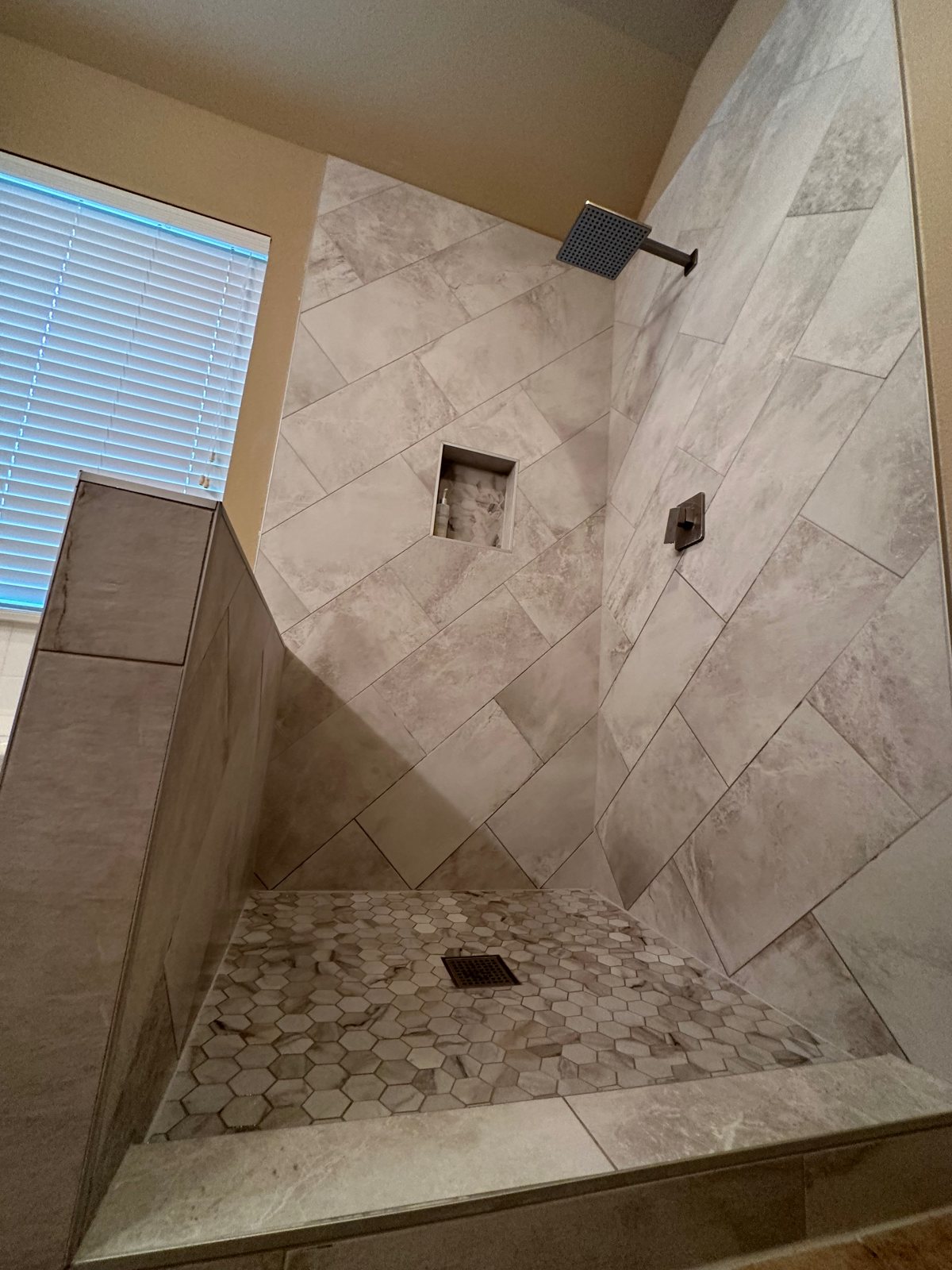
- Tub removed and replaced with a tiled walk-in shower with a proper waterproofing system
- Plumbing valve and drain updates
- Upgraded vanity, storage, and lighting plan
- Better tile, run further up the walls
$35,000 to $45,000 — the full primary bath remodel. Layout changes live here:
- Walls or plumbing moved to fix a cramped floor plan
- Oversized walk-in shower, sometimes a freestanding tub as well
- Custom tile work, frameless glass, double vanity
- Updated electrical, ventilation, and a finish level that matches the rest of a well-kept home
The most extensive projects sit at the top of that range. We will confirm pricing for your specific bathroom after a walk-through and scope definition. That is not a sales line. It is how accurate numbers get made.
Why Keller Homes Have Their Own Cost Story
Keller grew up along Keller Parkway, the stretch of FM 1709 that runs east-west through the middle of town. The established neighborhoods off that corridor, and the older homes around Old Town Keller near US 377, were built across different decades, and the bathroom behind the door usually shows its era.
A few patterns come up again and again in homes like these:
- Original builder-grade bathrooms reaching end of life. Fiberglass surrounds, cultured marble tops, and original valves that have done their twenty-plus years. These baths usually fall in the first two budget tiers because the layout itself still works.
- Slab foundations. Like most of North Texas, Keller homes sit on slabs. Moving a drain means cutting concrete, which is one of the clearest lines between a mid-range project and a full remodel. Keep the drains where they are and you protect your budget.
- Aging shower pans and waterproofing. The failure you cannot see from the hallway. If a shower has been seeping into the wall cavity or subfloor framing for years, the repair gets folded into the remodel. It is the most common surprise we open up, and a contingency in the budget exists exactly for this.
Where the Money Goes
A typical mid-range bathroom budget breaks down roughly like this: labor across all trades takes the largest share, tile and waterproofing materials come next, then the vanity and countertop, plumbing fixtures, glass, and finally lighting, paint, and accessories. Two takeaways from that picture:
- Cutting the visible finishes saves less than people hope, because so much of the cost is skilled labor and what lives behind the walls.
- The waterproofing system, valves, and drain work are the worst places to economize. Nobody admires them on the finished walk-through, and they decide whether the bathroom is still sound in fifteen years.
Permits and Inspections in Keller
Keller is straightforward about this. Replacing a fixture in the same spot, like swapping a faucet, normally does not require a permit. Moving or adding plumbing or electrical does. A remodel that relocates a drain, adds a circuit, or changes the layout will involve city permits and inspections, and Keller builds to the International codes the city has adopted.
If you are unsure where your project falls, the city’s Building Services department will tell you, or we will sort it out as part of the proposal. Permit coordination is included in how we run projects. Inspections are not an obstacle. They are a second set of eyes on work that is about to be sealed behind tile.
What a Typical Mid-Range Project Looks Like
To make the numbers concrete, here is the shape of a typical tub-to-shower conversion in an established Keller neighborhood. The bathroom is original to the house. The layout works, but the tub never gets used and the surround is showing its age.
The scope runs like this: demolition down to the studs in the wet area, a new shower pan and full waterproofing system, valve and drain updates while the wall is open, tile up to the ceiling, a new vanity with a quartz top, new flooring, lighting, exhaust fan, paint, and glass measured and installed after the tile sets. Plumbing and electrical inspections happen at rough-in, before anything closes up.
Week one is demolition and rough-in. Week two is waterproofing and tile. Week three is vanity, fixtures, paint, and punch-out, with glass following as soon as fabrication allows. The homeowner loses the bathroom for the duration but keeps the rest of the house clean and usable, because dust protection and daily cleanup are part of the job, not a courtesy.
That project lands in the middle tier. Move the drain or take down a wall and it climbs. Keep the existing tub location and refresh the surfaces instead, and it drops toward the first tier. Scope is the dial.
Where to Spend and Where to Save
Spend on the things that are expensive to redo: the waterproofing system, the shower valve and drain, tile installation labor, and the glass. These are buried or built-in, and fixing them later means demolition.
Save on the things you can change in an afternoon five years from now: mirrors, light fixtures, hardware, accessories, and paint. A mid-priced faucet from a reputable line outlasts a designer name at three times the price more often than the showroom suggests. Quality tile in a simple pattern usually reads better than cheap tile in a complicated one, and it costs less to install.
Planning Your Timeline in 2026
Budget is half the planning. The calendar is the other half. Custom vanities and semi-custom cabinetry carry the longest lead times, often several weeks from order to delivery, and frameless glass cannot even be measured until tile is finished. Tile itself is usually quick unless you pick something imported or special-order.
The practical move is to make every selection before demolition starts. A bathroom that sits half-finished waiting on a backordered vanity is the most avoidable delay in remodeling, and it is avoided with ordering discipline, not luck. We build the selection schedule into the proposal so materials arrive before the trade that needs them. If you want the bathroom done by the holidays, the conversation should start months earlier, not weeks.
See Our Bathroom Work in 360°
Photos only show you what someone chose to frame. These are two bathrooms we actually built — tap either one, then drag to look around or go fullscreen.
Master bathroomA finished master bathroom of ours in Fort Worth — tiled walk-in shower, double vanity, LED mirrors. Tap the photo, then drag to look around.
Guest bathroomA finished guest bathroom of ours in Fort Worth — tub with a tiled surround and glass-mosaic niche. Tap the photo, then drag to look around.
How to Get a Real Number
Internet calculators do not know that your shower pan is original, your drain sits eight inches from where the new layout wants it, or your framing got wet in 2019. A real number comes from a walk-through, a written scope, and line-item pricing you can read.
That is how we work. If you are planning a project, start with our bathroom remodeling in Keller page for local specifics, or look at the broader bathroom remodeling services we build across the area. We are based in Fort Worth, TX, serving homeowners across Tarrant County, and Keller is squarely in our service area.
Frequently Asked Questions
How long does a bathroom remodel take in Keller?
Most bathroom remodels run three to six weeks of active work. Keep-the-layout projects sit at the short end. Layout changes, custom tile, and frameless glass push toward the long end, mostly because glass is measured after tile is done and then fabricated. Permit review and material lead times add calendar time before work starts, so plan the whole effort in months, not weeks.
Do I need a permit to remodel a bathroom in Keller?
It depends on scope. Swapping a fixture in the same location, like a faucet, normally does not require a permit in Keller. Moving or adding plumbing or electrical does, and most real remodels involve at least some of that. The city’s Building Services department can confirm what your project needs, and we handle permit coordination as part of every job we run.
Is $15,000 enough for a bathroom remodel in Keller?
For the right scope, yes. At the bottom of the range you keep the existing layout, keep the tub or shower where it is, and put the budget into a new surround or tile, vanity, flooring, lighting, and fixtures. It will not cover moving walls or plumbing, but a well-executed refresh at this level can make a dated guest bath feel new.
What usually surprises homeowners during a bathroom remodel?
What is behind the wet wall. Older shower pans and surrounds can leak slowly for years, and the damage only shows once demolition opens things up. That is why a responsible proposal carries a contingency and why we flag the risk up front on older bathrooms. Finding it during a planned remodel is far cheaper than finding it after the floor fails.