
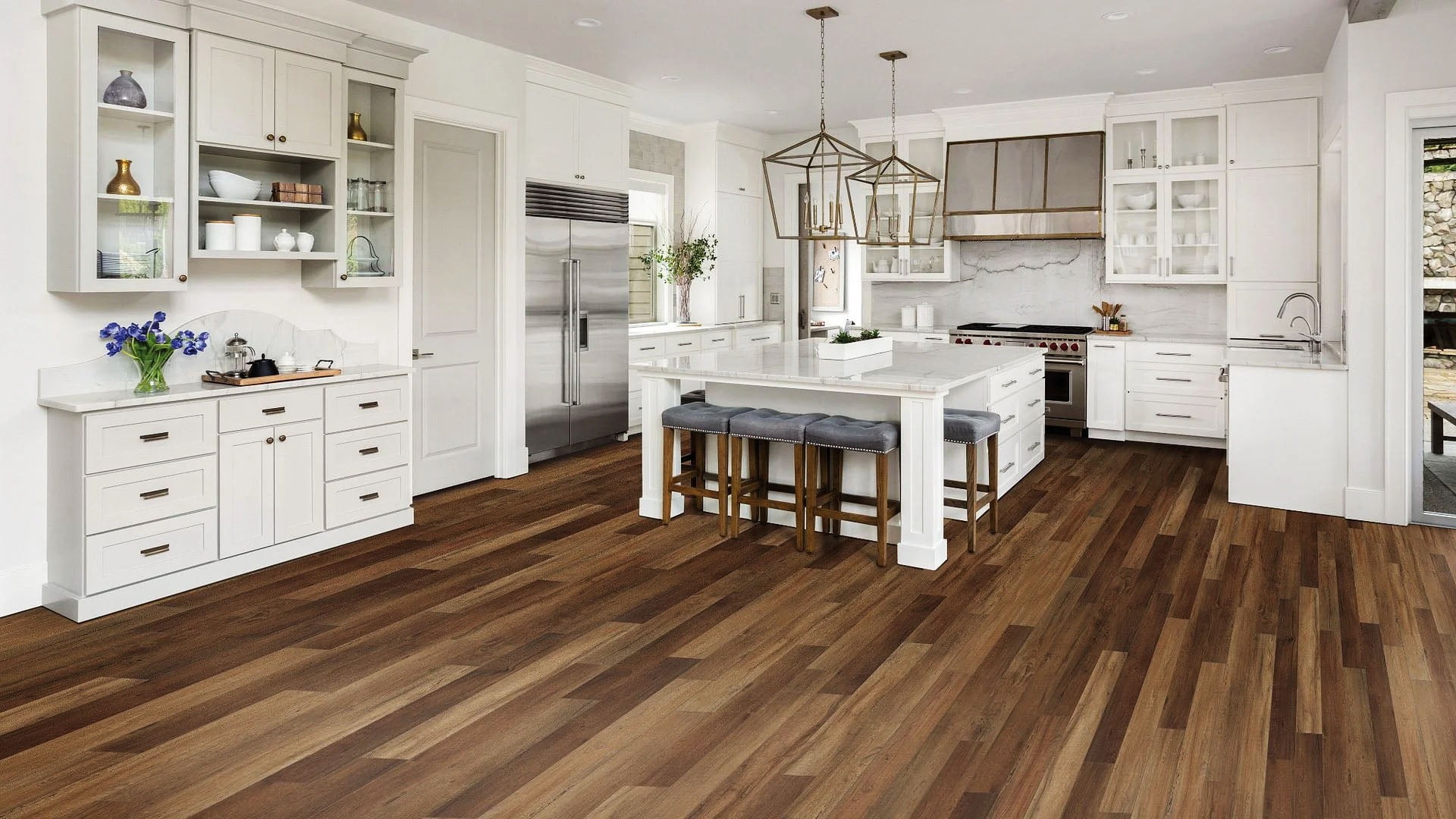
Kitchen Flooring: Hardwood vs. Tile vs. Vinyl
Flooring is one of the first things people ask me about when we sit down to plan a kitchen. It makes sense. The floor takes a beating in a kitchen, it covers a lot of square footage, and once it’s down you live with it for fifteen or twenty years. Pick wrong and you’re either replacing it early or living with something that scratches, stains, or feels cold every time you walk across it. In a compact kitchen, flooring choice interacts with layout — our small kitchen remodeling ideas guide walks through that.
I’ve installed all three of the big options in Fort Worth kitchens for years now: hardwood, tile, and vinyl. None of them is the “best.” Each one has a job it does well and a job it does poorly. Here’s how I talk it through with homeowners around Tarrant and Parker County so you can make a call you won’t second-guess later.
What a kitchen floor actually has to survive
Before we get to materials, it helps to be honest about what a kitchen floor goes through. It gets dropped pans, dragged bar stools, dog nails, and spilled water that doesn’t always get wiped up right away. In North Texas you also have two things working against you that people forget about.
The first is our soil. A lot of homes around Fort Worth, Aledo, and Weatherford sit on expansive clay that swells when it’s wet and shrinks when it’s dry. That movement shows up as small shifts in the slab or subfloor, and certain floors handle that movement better than others. The second is the humidity swing. We go from sticky August afternoons to bone-dry winter weeks when the heat is running. Wood expands and contracts with that swing, and that matters for what you put down.
Keep those two things in mind as we go through the options.
Hardwood: warm and beautiful, but it has rules
Real hardwood is hard to beat for looks and feel. It makes a kitchen feel like part of the house instead of a utility room, and an open-concept layout where the kitchen flows into the living area usually looks best with one continuous wood floor running through both.
The honest tradeoff is moisture. Solid hardwood and standing water don’t get along. A dishwasher leak you don’t catch, a slow drip under the sink, or a kid who keeps splashing at the sink can cup or stain a solid wood floor. It can be sanded and refinished, which is a real advantage over the other two, but it’s still the option that asks the most of you.
For most Fort Worth kitchens I steer people toward engineered hardwood rather than solid. Engineered wood has a real wood veneer over a plywood core, so you get the same look on top, but the layered core is far more stable when our humidity swings. It handles our climate better and it’s a smarter choice over a concrete slab. If you love wood and you’re willing to wipe up spills promptly, engineered hardwood is a great kitchen floor.
Tile: the workhorse for a Texas kitchen
If you want the floor you can mostly forget about, porcelain tile is usually my recommendation. It does not care about water. It does not stain. You can drop a cast-iron skillet and worry more about the skillet than the floor. For a busy family kitchen, that durability is worth a lot.
Porcelain is denser and tougher than standard ceramic, so for a floor that’s the one I’d spend on. Large-format tile with thin grout lines is popular right now because there’s less grout to clean and it makes a small kitchen feel bigger. And the look has come a long way. Wood-look porcelain plank gives you the warm appearance of a wood floor with none of the moisture worry, which is a combination a lot of my clients land on.
Two honest downsides. Tile is hard and cold underfoot, so standing at the sink for a long stretch is less comfortable than wood or vinyl. If that bothers you, a heated floor mat underneath is something to plan for during the remodel, not after. The second is that tile is only as good as the prep under it. On a slab that moves, tile that’s set on a floor that wasn’t properly prepared can crack or pop loose. This is where a good install matters more than the tile itself. A proper underlayment or crack-isolation membrane is the difference between tile that lasts twenty years and tile that’s cracked in two. Don’t let anyone skip that step to save a day of labor.
Luxury vinyl: the practical middle ground
Vinyl has changed a lot. The sheet vinyl people remember from old kitchens is gone. What we install now is luxury vinyl plank, usually called LVP, and it’s become one of the most requested floors I do.
The appeal is simple. It’s fully waterproof, it’s softer and warmer underfoot than tile, it handles dropped dishes and pet nails well, and a good rigid-core LVP holds up to the slab movement we get here without much fuss. It also installs over a wider range of subfloor conditions than the other two, which can save money and time on the labor side. For a family that wants a wood look, real durability, and a friendlier price than tile or hardwood, it’s often the right answer.
Where I’m straight with people: vinyl is not real wood, and a discerning buyer can tell. It won’t add resale value the way genuine hardwood can, and you can’t sand and refinish it the way you can wood. If it gets damaged you replace the planks. There’s also a real quality range here. Cheap thin LVP can dent under heavy appliances and fade in a sunny breakfast nook. Spend for a thicker wear layer and a rigid core and it’ll serve you well for a long time. Buy the bargain stuff and you’ll be disappointed.
How I help homeowners choose
When we’re sitting at the table, the decision usually comes down to a few plain questions:
- How much does water worry you? Young kids, big dogs, a history of leaks. If water is a real concern, porcelain tile or quality LVP over solid hardwood.
- How does it need to feel? If you cook for hours and want something warm and forgiving underfoot, vinyl or engineered wood beat tile, unless you add a heated floor.
- Are you thinking about resale? Genuine wood still carries the most weight with buyers in our market. Tile is a close, safe second.
- What’s the budget, honestly? Of the three, well-installed LVP is usually the friendliest on cost, tile sits in the middle, and engineered hardwood runs the highest.
One more thing worth saying. Flooring is rarely a standalone job. If you’re already opening up the kitchen for new cabinets, counters, or a layout change, that’s the right moment to handle the floor, because the order of operations and the subfloor prep get done correctly the first time. You can see how we approach the whole project on our kitchen remodeling page, and we offer two clear paths depending on scope, from a basic refresh to a full remodel — the Fort Worth kitchen cost guide shows the numbers behind both.
A note on permits and prep in Tarrant County
Swapping flooring on its own usually doesn’t require a permit. But the moment a kitchen project touches plumbing, electrical, or a wall, the city of Fort Worth and the surrounding municipalities expect the proper permits and inspections, and that’s a good thing. It’s what protects you if something’s ever done wrong. As a Fort Worth and Aledo city-registered building contractor, fully insured, we pull the permits that are needed and handle the inspections so you’re not chasing paperwork. If your kitchen change grows into something bigger, our general contracting side coordinates the trades so the floor, the cabinets, and everything underneath line up.
The other piece people underestimate is prep. Old tile or layers of vinyl have to come up, the slab gets checked for cracks and level, and any soft spots in a subfloor get fixed before a single new plank or tile goes down. That prep is unglamorous and it’s where corners get cut by the cheapest bids. We don’t skip it, because the floor is only as good as what’s under it.
Let’s talk through your kitchen
There’s no universal right answer here. The right floor is the one that fits how your family actually uses the kitchen, the climate we build in, and the budget you’re working with. If you’re remodeling a kitchen anywhere around Fort Worth, Aledo, Weatherford, Keller, or the rest of Tarrant and Parker County, we’re glad to walk your space and give you a straight recommendation with no pressure.
Reach out for a free estimate through our contact page or call us at 817-210-7117. We’ll help you pick a floor you’ll be happy to stand on for years.