
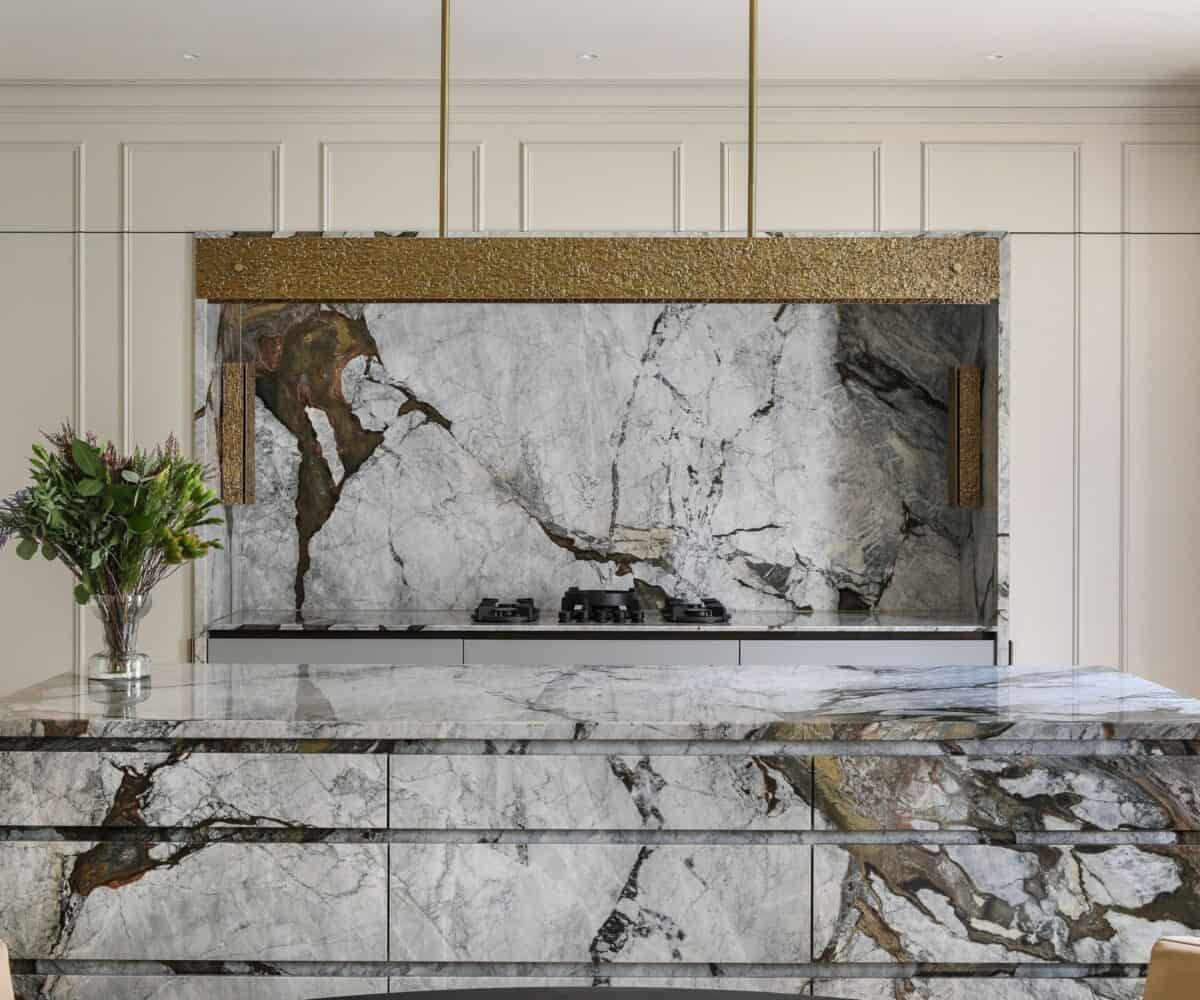
5 Best Kitchen Countertop Materials in Fort Worth
By Chris Sibley and Xavier at Salvation Home Remodeling — a Fort Worth and Aledo city-registered building contractor (#RB026782 / #25-000007), insured, and rated 5.0 on Google. Serving Fort Worth since 2001; Salvation Home Remodeling LLC established 2017. Every job carries a written warranty with two terms: three years covering everything we touch, and five years on our workmanship. Our foundation is faith. Our standard is craftsmanship. The prices below are what we actually charge on real Tarrant County projects — more about us.
Picking a countertop is one of the few decisions in a kitchen remodel that you touch, lean on, and look at every single day. It is also the one homeowners tend to overthink and underthink at the same time. They agonize over a color, then never ask how the material holds up to a hot pan, a dropped cast-iron skillet, or the hard water we deal with across Tarrant and Parker County.
I have set a lot of countertops in Fort Worth kitchens over the years, and the honest truth is that there is no single “best” material. There is the material that fits how you actually cook, what you want to spend, and how much upkeep you are willing to do. Below is a straight breakdown of the five materials I see most often here, what they cost in the real world, and where each one tends to disappoint people so you go in with eyes open.
What Fort Worth Kitchens Actually Demand
Before the materials, it helps to know what our local conditions throw at a countertop. North Texas water is hard, so anything that needs sealing will show mineral spotting faster if you skip maintenance. Summer heat means people run their ovens and cooktops hard, and a surface that scorches is a real problem. And a lot of homes around Keller, Aledo, and Benbrook have open kitchens that flow into living space, so the counter is on display, not tucked away.
So I judge every material on four things: how it handles heat, how it handles daily abuse, how much maintenance it asks of you, and what it costs installed. Sticker price on the slab is only part of the story. Fabrication, edge work, and a clean install are where a counter either looks custom or looks cheap.
1. Quartz (Engineered Stone)
Quartz is the material I recommend most often, and it is the one most of my kitchen clients land on. It is ground natural quartz bound with resin, which makes it non-porous. That single fact solves a lot of problems. No sealing, no soaking up red wine or oil, and it wipes down like a kitchen surface should.
The trade-off is heat. Quartz handles warm dishes fine, but a pan straight off the burner can scorch or yellow the resin, so you still need a trivet. The marble-look quartz patterns have gotten genuinely convincing, which is why so many homeowners who want a white, veined look choose it over real marble. In typical Fort Worth-area pricing, quartz tends to sit in the middle of the pack, more than basic laminate or tile and roughly in line with or a touch above a mid-grade granite once you factor in fabrication.
2. Granite (Natural Stone)
Granite has cooled off as a trend, but it is still a workhorse, and I will defend it. It is genuinely heat-resistant, so it forgives the cook who sets a hot pot down without thinking. Every slab is one of a kind, which some people love and some people find too busy. If you want a natural stone with real movement and depth, granite delivers it.
The catch is sealing. Granite is porous, so it needs to be sealed at install and re-sealed periodically, more often here because of our hard water. Skip it and you can get staining or dull spots. That is not a deal-breaker, it is just a chore you are signing up for. Pricing runs a wide range depending on whether you choose a common color or an exotic slab, but builder-grade granite is often one of the more affordable real-stone options.
3. Butcher Block (Wood)
Wood is the wildcard. Butcher block brings a warmth that stone cannot fake, and it is a great fit for a farmhouse or transitional kitchen, which we see plenty of out toward Weatherford and Aledo. It is also the most hands-on material on this list, and I want you to know that before you fall in love with the look.
Wood moves with humidity, it can scorch, and it needs regular oiling to stay sealed against water near the sink. Some homeowners love that upkeep as part of the character. Others regret it within a year. A smart middle path I often suggest is running butcher block on an island or a coffee bar while keeping a more durable surface around the sink and cooktop. You get the warmth without betting the whole kitchen on a high-maintenance material.
4. Solid Surface (Acrylic Composite)
Solid surface, the category most people know by the brand name Corian, is a man-made acrylic. Its standout feature is that it is seamless. Sinks can be integrated right into the counter with no lip to trap crumbs, and scratches or minor scorches can often be sanded out, which is something no stone offers.
It is softer than quartz or granite, so it scratches and scorches more easily, and that hot-pan rule applies double here. But for a clean, low-seam look at a friendlier price than stone, it earns its place, especially in a bathroom or a secondary kitchen. It is one of the more budget-conscious upgrades when a full stone job is not in the cards.
5. Porcelain Slab
Porcelain slab is the newer option, and it is winning me over for the right project. It is extremely hard, highly heat-resistant, UV-stable, and non-porous, so it shrugs off the things that worry me about other materials. Manufacturers can print convincing marble and concrete looks onto it, and it can be made thin for a sleek modern edge.
The honest downsides are two. Fabrication takes real skill because the slabs can chip on the edges if a crew is careless, so installer experience matters more here than with any other material. And while the surface is tough, a sharp impact on an exposed edge can damage it. For a contemporary kitchen, an outdoor kitchen, or anywhere that sees brutal sun and heat, porcelain is worth a serious look.
How to Actually Choose
If I had to boil it down: choose quartz if you want the lowest-fuss surface and a clean modern look, granite if you want real stone and do not mind sealing it, butcher block if warmth matters more than worry-free, solid surface if you want a seamless look on a tighter budget, and porcelain if you want the toughest modern material and you hire a crew that knows how to cut it.
One thing I tell every client: the countertop is rarely the line item that blows a budget. The cabinets, the layout changes, and the plumbing and electrical behind the walls usually move the number more than the slab does. We break the whole picture down on our kitchen remodeling page, where a Basic Kitchen Refresh typically runs $20,000 to $25,000 and a Full Kitchen Remodel runs $25,000 to $50,000 for the Fort Worth area. A countertops-only swap runs $4,000 to $8,000 installed — with the honest heads-up that new counters usually take the existing backsplash out, so we scope those together. Roughly 80% of our installs are quartz, with quartzite and granite splitting the rest; the deeper comparison lives in granite vs. quartz vs. marble. If the kitchen is part of a larger project, the same material questions come up in full home remodeling and in an outdoor living space, where porcelain and granite really earn their keep against the Texas sun.
Get a Straight Answer for Your Kitchen
The right countertop depends on your kitchen, not a list. If you want someone to walk your space, talk through how you cook, and give you honest numbers without a sales pitch, that is exactly what we do. Salvation Home Remodeling is a Fort Worth city-registered building contractor, fully insured, serving Fort Worth and the surrounding Tarrant and Parker County communities.
Call us at 817-210-7117 or request a free estimate and we will help you choose a surface you will be glad you picked years from now.