
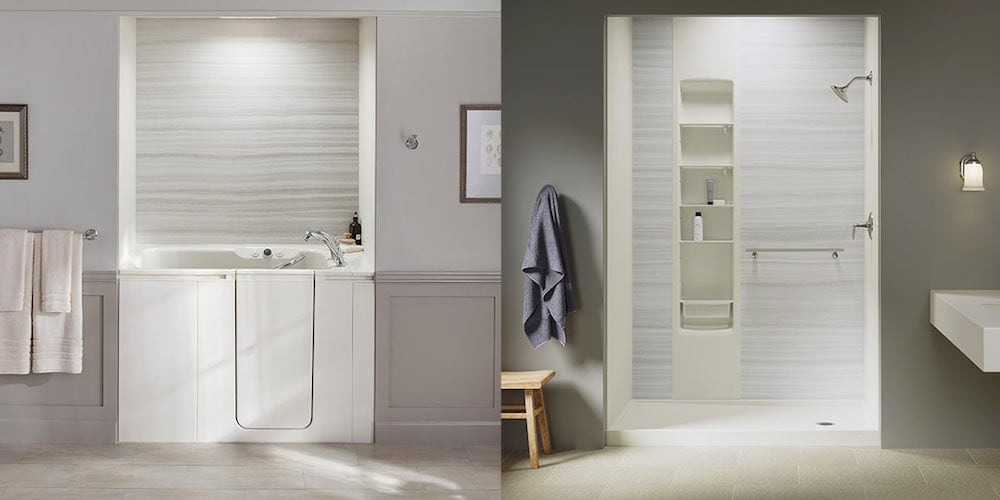
Walk-In Showers vs. Bathtubs in Texas Homes
This is one of the first questions I get when a homeowner sits down to plan a bathroom remodel here in Fort Worth. Do you keep the tub, or do you tear it out and put in a big walk-in shower? There’s no single right answer. It depends on who lives in the house, how long you plan to stay, and what you actually use day to day. I’ve built both, and I’ve watched both choices age well and age badly. Here’s how I talk it through with my clients so you can make a call you won’t regret.
Start With How You Actually Live
Forget what looks good on a design site for a minute. Think about a normal week in your house. If nobody has taken a bath in three years and the tub is mostly a place to set the laundry basket, that’s a strong signal. A walk-in shower gives you more usable room, it’s easier to clean, and it’s far easier to step into as you get older. A lot of my Tarrant County clients in their 50s and 60s are pulling tubs out of the primary bath for exactly that reason. They want a curbless or low-curb entry they can still use comfortably twenty years from now.
On the other side, if you have young kids, a tub is hard to beat. Bathing a toddler in a walk-in shower is a wet, miserable job. If you have small children or you genuinely soak to unwind at the end of a long day, keep a tub somewhere in the house. It doesn’t have to be in every bathroom, but it should be in at least one.
The Resale Question Most People Get Wrong
People hear “you need a tub for resale” and treat it like a hard rule. It’s not. The real rule is simpler: a house should have at least one bathtub somewhere. Most buyers with kids won’t seriously consider a home with zero tubs, and around here that’s still a meaningful slice of the market. So if your house only has one full bathroom, I’d think hard before removing the only tub in it.
But if you have two or three full baths, converting the primary bathroom to a large walk-in shower is often the move that adds the most appeal. A roomy, well-built shower in the primary suite reads as an upgrade to most buyers, as long as a tub still lives in a secondary bath or the kids’ bathroom. You get the best of both. The mistake is stripping every tub out of the whole house chasing a spa look.
What Texas Weather and Water Do to Each One
Our climate matters more than people expect inside a bathroom. North Texas water is hard. That mineral content leaves scale on glass shower doors, fixtures, and tile faster than it would in a soft-water region. A big frameless glass shower looks stunning the week it goes in, and it’ll show water spots within days if nobody squeegees it. I tell clients straight: a walk-in shower with lots of glass is more glass to keep clean. If that’s not your personality, we look at lower-maintenance options like a partial glass panel, a different tile layout, or fixtures that hide spotting better.
Humidity is the other one. Fort Worth summers are humid, and a bathroom that doesn’t breathe will grow mildew in the grout no matter which fixture you choose. Whichever way you go, the exhaust fan has to be sized right and vented all the way outside, not just into the attic. I’ve opened up plenty of remodels where the previous fan dumped moist air into the attic and quietly rotted the framing. That’s the kind of thing that doesn’t show up until it’s expensive.
What Actually Happens Behind the Wall
Here’s the part that drives the budget, and it’s the part homeowners can’t see. A tub-to-shower conversion is rarely a simple swap. When we pull a tub, the drain sits in a different spot than a shower drain needs, so the plumbing usually has to move. If your bathroom is on a slab, which a lot of Fort Worth-area homes are, that can mean cutting into concrete to reroute the drain. That’s real labor and it’s not optional if you want it done right.
Waterproofing is where corners get cut on cheap jobs, and it’s the one place you never want them cut. A proper walk-in shower needs a fully waterproofed pan and walls before a single tile goes up. Skip that and you’ve got a slow leak feeding the framing for years. We don’t move forward without it, and any good remodeler in Tarrant or Parker County will tell you the same.
One more practical note: certain work on the plumbing requires permits and inspection through your city. The rules vary between Fort Worth, Aledo, Weatherford, Keller, and the smaller towns out here, and part of our job as a city-registered contractor is pulling those permits and getting the inspections passed so the work is on record. If a contractor wants to skip permits to save you a few dollars, that’s a red flag, not a deal.
What This Costs in the Fort Worth Area
I’ll give you honest ranges instead of a lowball number that falls apart the moment we open a wall. A full bathroom remodel in our area typically runs $25,000 to $45,000, and where you land inside that depends on the size of the space, the tile and fixtures you choose, and how much plumbing has to move. A walk-in shower conversion tends to push toward the higher end when we’re rerouting drains in a slab or building a large custom shower with a lot of glass and tile. A straightforward tub replacement, or keeping the tub and refreshing around it, usually sits lower in the range.
If you land on the shower side, the walk-in shower conversion walkthrough shows exactly what happens behind the tile — and the Fort Worth bathroom cost guide breaks down what each budget actually buys.
The honest way to think about it: the fixture itself isn’t the big cost. The labor, the waterproofing, and the plumbing changes are. A simpler design that respects where your existing plumbing already sits will always cost less than one that moves everything around. I’d rather tell you that up front than surprise you with a change order.
How I’d Decide
If you want a quick framework, here’s roughly how I steer the conversation:
- Aging in place or planning to stay long-term — lean walk-in shower, low or no curb, a built-in bench, and a grab bar or solid blocking in the wall so one can be added later.
- Young kids in the house — keep at least one tub, and make sure the family bathroom is the one that has it.
- Single full bath in the whole home — be cautious about removing the only tub; a tub-shower combo often serves you better.
- Multiple full baths and you want a spa-feel primary suite — walk-in shower in the primary, tub stays in a secondary bath. This is the sweet spot for most of my clients.
- You hate cleaning glass — tell us, and we’ll design the shower around that instead of handing you a maintenance headache.
There’s no trophy for the trendiest bathroom. The right choice is the one that fits how your family actually lives and that’s built to last in our climate. We’ve handled this exact decision on plenty of bathroom remodeling projects across Fort Worth, and we’ll walk your space with you before anyone talks about tile. If the project grows into more than one room, we also handle full home remodeling and bring the same standard of work to all of it.
Let’s Look at Your Bathroom
If you’re weighing a walk-in shower against keeping the tub, the best next step is to have someone who’s done it many times look at your actual room and your actual plumbing. At Salvation Home Remodeling, we’ll give you an honest read and a free estimate, with no pressure to decide on the spot. Call us at 817-210-7117 or reach out through our contact page, and we’ll set up a time to walk through it together. We’ve served Fort Worth homeowners since 2001, and we believe good work done with care speaks for itself.