
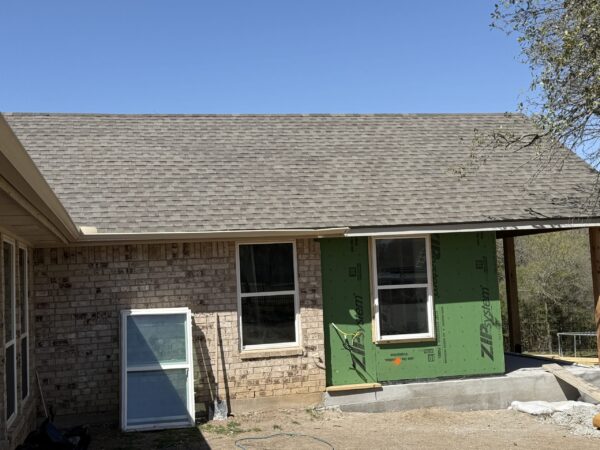
Room Addition Permits in Fort Worth: What the City Says
Every addition in Fort Worth needs a building permit, the City says. Zoning may add rules, and a new foundation needs engineered plans.
Yes. The City of Fort Worth says every addition needs a building permit. Its page also says zoning may add rules on where the addition sits, how tall it is and how big it is. A new foundation needs a permit and engineered building plans. We read the City page on November 13, 2026.
On this page
A room addition in Fort Worth always has a permit step. This page puts what the City’s residential permitting page says in plain words, part by part. It also shows who can apply and how we bill the permit.
- The City’s page says all additions need a building permit. The additions section we read names no size below which a permit is not needed.
- Zoning may add rules on location, height and square footage. They depend on how your lot is zoned.
- New foundations need a building permit and engineered building plans.
- Our permits are billed at cost. They are not in the quote.
- This page is about homes inside the City of Fort Worth only.
What the City of Fort Worth says about additions
We read the City of Fort Worth Residential Permitting page on November 13, 2026. Its section on additions starts with one short line: “All additions require building permits.”
The same section says there may be more zoning rules on the location, the height and the square footage. It says these depend on the zoning classification of each property. So the rules for your lot depend on how your lot is zoned.
The page says these permits cover one- and two-family detached homes and the accessory buildings that go with them, each on its own platted lot.
City rules can change, and other cities have their own rules. Read the page yourself before you plan: City of Fort Worth Residential Permitting.

The City’s page, part by part
| Part of the job | What the City’s page says |
|---|---|
| The addition itself | All additions need a building permit. |
| Where it sits, how tall it is, how big it is | There may be more zoning rules. They depend on how the lot is zoned. |
| The new foundation | New foundations need a building permit and engineered building plans. |
| A garage turned into a room | Enclosing a garage for another use needs a building permit. A variance may be required if the work removes required parking spaces. |
| A deck or platform built with it | Platforms, walks and decks over 6 inches above grade need a building permit. |
| A carport built with it | All carports need building permits. A carport in the front yard needs a special exception. |
An addition that builds out on the ground usually needs a new foundation. When it does, the City’s foundation line applies. A garage conversion has its own line, and our garage conversion cost guide covers that job.
What this page does not tell you
We read only the City’s residential permitting page. So this page does not list the drawings the City asks for.
We do not print a permit fee or a review time. Those are the City’s numbers, and they change.
We do not print a setback distance. A setback is how far a building must stay from the lot line. Ask the City what applies to your lot.
Who can apply for the permit
The City page says a permit applicant must be a registered building contractor, or a homeowner who meets the rules for a homestead permit.
The homestead rules include that the applicant owns the house and lives in it solely as a primary residence. The City page names a homestead exemption from the appraisal district as a way to show that.
Texas has no state license for general contractors. So ask any contractor you talk to for the City registration number.
How we handle the permit
Permits are billed at cost. They are not in the quote. Licensed trades pull the permits for their scope.
We are a Fort Worth & Aledo city-registered building contractor (#RB026782 / #25-000007), insured.
We plan the work around the City’s process. Ask us at the walk-through what your addition needs, and confirm with the City.
What an addition costs
These are our own price tiers. A permit is billed at cost and is not in these numbers.
- One room with no plumbing runs $60,000 to $110,000.
- A room with a bathroom, such as an in-law suite, runs $110,000 to $190,000.
- More than one room, a second story, or an addition with a kitchen runs $190,000 to $300,000 and beyond.
We do not tie a price to a permit. The room addition cost guide shows what each tier covers.

Four steps before you plan an addition
- Ask the City how your lot is zoned. Zoning may add rules on location, height and size.
- Decide where the space goes. Out on the ground, up on a second story, or inside a garage. A garage and a new foundation each have their own line on the City’s page. Every addition falls under the additions line.
- Plan for the foundation plans. The City’s page asks for engineered building plans for a new foundation.
- Get it in the written scope. Read what a written scope protects you from.
A change after you sign is a change order, priced at cost plus 25%.
How to get your number
It starts with a free walk-through. We look at the house and the lot, we write the scope, and we price it. The quote is good for 30 days.
Our typical start is one to two weeks out, depending on our schedule. Our own in-house crew does the work.
Every job carries a written warranty with two terms: three years on everything we touch, and five years on our workmanship. Manufacturer warranties on materials pass through to you. To set a walk-through, call or text 817-210-7117.
Questions homeowners ask
Do I need a permit for a room addition in Fort Worth?
Yes. The City of Fort Worth Residential Permitting page, read on November 13, 2026, says all additions need a building permit.
Is there a size below which an addition needs no permit?
The additions section we read names no such size. It says all additions need a building permit.
Does a new foundation need engineered plans?
The City page says new foundations for residential structures need a building permit and engineered building plans.
Do I need a permit to turn a garage into a room?
The City page says enclosing a garage for another use needs a building permit. It says a variance may be required if the work removes required parking spaces.
Who can apply for an addition permit?
The City page says the applicant must be a registered building contractor, or a homeowner who meets the rules for a homestead permit.
Is the permit in your price?
No. Permits are billed at cost and are not in the quote.